How Edge Computing Is Powering Real-Time Applications
Published: February 20, 2026 | Author: Tech Team | Category: Infrastructure | Read time: 19 minutes
A deep look at how edge computing reduces latency, improves reliability, and enables real-time experiences across modern apps, devices, and connected systems.
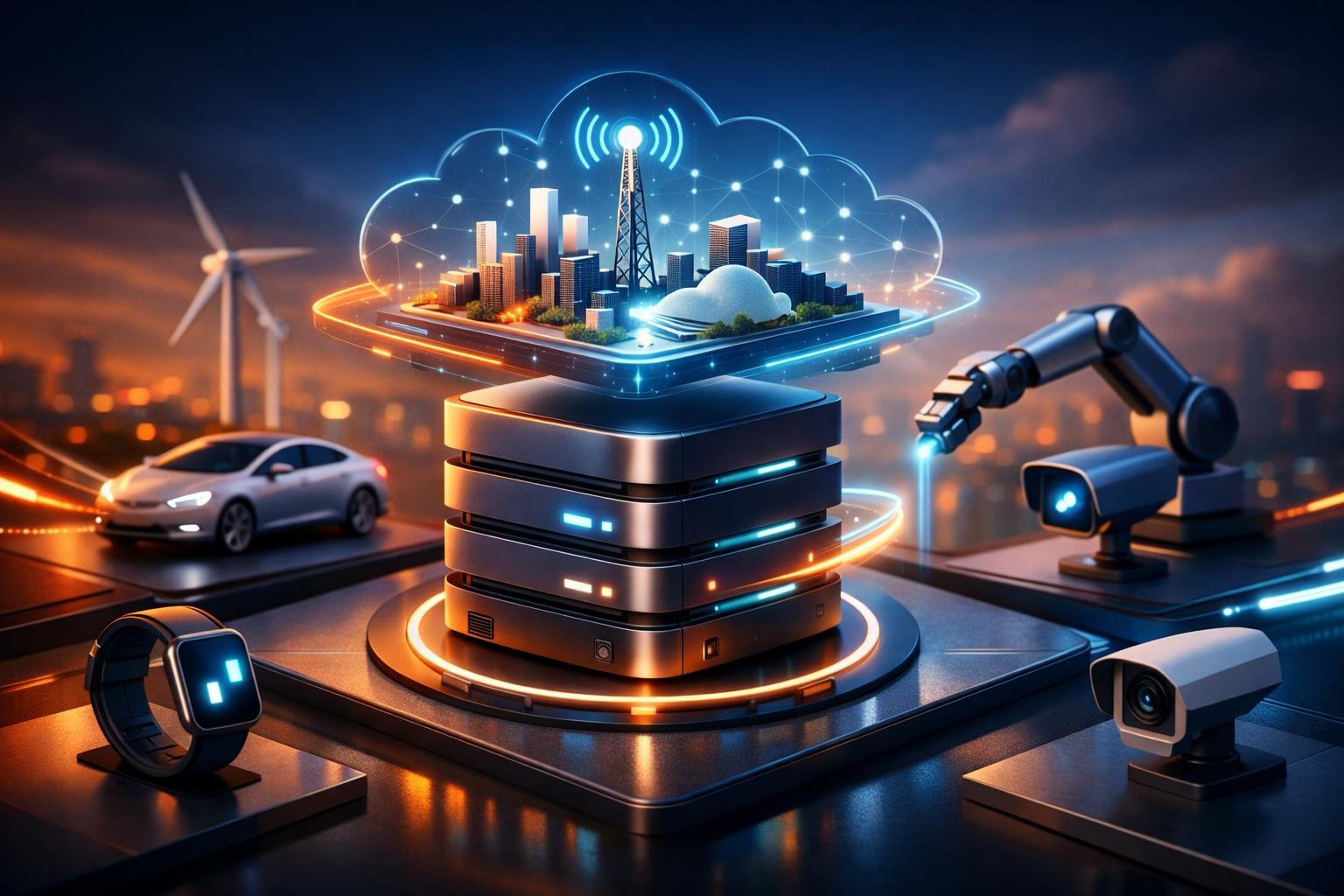
In today's fast-paced digital world, the demand for real-time applications has never been higher. From seamless video conferencing to autonomous vehicles and smart manufacturing, modern technologies rely on the ability to process data instantly. At the heart of this revolution is edge computing - a paradigm shift that brings computation and data storage closer to the sources of data generation. By reducing latency, improving reliability, and enabling real-time experiences, edge computing is fundamentally transforming the way businesses, devices, and users interact with technology. In this comprehensive article, we dive deep into the mechanics of edge computing, its practical applications, and its business impact - exploring why it's becoming indispensable for powering real-time applications.
Understanding Edge Computing: The Basics
Traditional cloud computing has served as the backbone of digital transformation for over a decade. However, as the number of connected devices skyrockets and applications demand ever-lower response times, relying solely on distant data centers is no longer sufficient. Edge computing addresses this bottleneck by moving computation, analytics, and storage to the "edge" of the network - closer to where data is created.
What Is Edge Computing?
Edge computing is a distributed IT architecture where client data is processed at the periphery of the network, as close as possible to the originating source. Instead of sending all data to a centralized cloud for processing and storage, edge computing allows for certain tasks to be performed locally - on edge devices, gateways, or micro data centers. This shift delivers significant benefits for applications that are sensitive to latency, bandwidth, reliability, and privacy.
Key Characteristics of Edge Computing
- Proximity: Processing occurs near data sources - IoT sensors, user devices, or local servers - minimizing physical and network distance.
- Decentralization: Computational responsibilities are distributed among edge nodes rather than centralized in a cloud data center.
- Autonomy: Edge nodes can often function independently, maintaining operation even if connectivity to the cloud is interrupted.
- Real-time Processing: By handling data at the edge, applications can respond instantly to events and user inputs.
Why Real-Time Applications Need Edge Computing
Real-time applications are those that require immediate - or near-instantaneous - response to events, user interactions, or environmental changes. Examples include live video analytics, industrial control systems, online gaming, AR/VR experiences, and connected vehicles. Even small delays in these scenarios can result in poor user experiences, safety risks, or financial losses.
The Challenge of Latency
Latency measures the time it takes for data to travel between the source and its destination. Even with advances in broadband networks and 5G, latency caused by long-distance transmission to centralized cloud data centers remains a significant hurdle. For many applications, especially those involving automation and critical decision-making, milliseconds matter.
- Industrial Automation: In robotics and manufacturing, a delay of 100ms can disrupt precision tasks or even cause accidents.
- Telemedicine: Remote surgeries or diagnostics require real-time feedback to ensure patient safety.
- Autonomous Vehicles: Self-driving cars process sensor data in milliseconds to make life-saving decisions.
Bandwidth and Connectivity Constraints
As IoT devices proliferate, the volume of data generated at the edge is exploding. Transmitting all this raw data to the cloud for processing is not only inefficient but also costly - clogging up network bandwidth and escalating storage expenses. Edge computing allows for localized data processing, transmitting only what is necessary and reducing the overall load on networks.
Reliability and Resilience
Mission-critical applications cannot afford downtime or loss of connectivity. Edge computing enhances system reliability by ensuring essential operations continue even if cloud connections are disrupted. This resilience is crucial for healthcare, utilities, and public safety applications.
Key Edge Computing Architectures
Edge computing is not a one-size-fits-all solution. Multiple architectures and deployment models have emerged to support different use cases and requirements.
1. Device Edge
Processing is performed directly on end devices such as smartphones, sensors, industrial robots, or IoT gateways. These edge devices often feature specialized hardware (e.g., GPUs, FPGAs, TPUs) for efficient real-time computation.
2. Edge Gateway
A gateway serves as an intermediary between edge devices and the cloud, aggregating, filtering, and processing data locally before forwarding relevant information upstream. Edge gateways are common in industrial automation, smart buildings, and retail environments.
3. Micro Data Centers
Micro data centers are small-scale facilities located closer to end-users or data sources. They provide substantial computing and storage capabilities without the latency of distant cloud data centers. These are prevalent in 5G networks, content delivery, and video streaming.
4. Hybrid Edge-Cloud Architectures
Many applications benefit from a hybrid approach, combining edge processing for latency-sensitive tasks with cloud computing for intensive analytics and long-term storage. This architecture enables flexibility, scalability, and cost optimization.
Real-World Applications: Where Edge Computing Shines
Edge computing is no longer a futuristic concept; it's actively powering real-time experiences across industries. Let’s explore concrete examples that highlight its transformative potential.
1. Smart Manufacturing and Industrial IoT
In the era of Industry 4.0, factories are brimming with sensors, cameras, and connected equipment generating massive volumes of data every second. Edge computing enables real-time monitoring and control on the factory floor:
- Predictive Maintenance: Edge analytics identify machine anomalies, vibration patterns, or temperature spikes, triggering alerts or automated interventions without waiting for cloud analysis.
- Quality Control: High-resolution cameras analyze products in real time, flagging defects instantly as items move along the assembly line.
- Human-Robot Collaboration: Robots equipped with edge processors can instantly coordinate with human workers, adapting to their movements and preventing accidents.
By processing critical data locally, manufacturers reduce downtime, optimize productivity, and adapt to changing conditions instantaneously.
2. Autonomous Vehicles and Transportation
Self-driving cars, delivery drones, and connected trains are quintessential edge computing use cases. Each vehicle is inundated with sensor data - from LIDAR, cameras, radar, and GPS - requiring split-second analysis:
- Collision Avoidance: Onboard edge systems detect obstacles and make immediate navigation decisions, independent of network connectivity.
- Fleet Management: Vehicles share summarized data with cloud systems for route optimization, while maintaining autonomy for real-time operations.
- Passenger Experience: In-vehicle infotainment and climate control respond instantly to passenger inputs.
Relying on remote cloud servers would introduce unacceptable delays, while edge computing empowers real-time perception and action - crucial for safety and reliability.
3. Smart Cities: Traffic Management and Public Safety
Urban environments are becoming "smarter" with the deployment of edge-powered cameras, sensors, and control systems:
- Traffic Control: Edge nodes analyze live video feeds to detect congestion, adjust signal timings, and relay alerts to drivers in real time.
- Public Safety: Surveillance cameras powered by edge AI can identify unusual behavior, detect emergencies, or recognize faces locally - helping law enforcement respond faster.
- Environmental Monitoring: Sensors at the edge monitor air quality, noise, and weather, triggering localized alerts or interventions as needed.
These applications benefit from lower latency, increased privacy, and improved resilience against connectivity outages.
4. Healthcare: Remote Monitoring and Diagnostics
Edge computing is transforming healthcare by enabling rapid, reliable data processing at the point of care:
- Remote Patient Monitoring: Wearable devices and home sensors track vital signs, analyzing anomalies locally and alerting caregivers or physicians instantly.
- Medical Imaging: Edge-enabled imaging equipment can pre-process scans, apply AI algorithms, and reduce the volume of data sent for specialist review.
- Telemedicine: Real-time video consultations and diagnostics are enhanced by edge platforms that ensure low-latency, high-quality streams - even in bandwidth-constrained environments.
Timely, accurate data processing at the edge reduces hospital visits, improves patient outcomes, and supports proactive intervention.
5. Retail: Customer Experience and Operations
Brick-and-mortar retailers are leveraging edge computing to merge physical and digital experiences:
- Smart Checkout: Cameras and sensors at the edge recognize products and customer actions, enabling frictionless checkout without sending video streams to the cloud.
- Personalization: Digital signage and shopping assistants adapt promotions in real time based on customer demographics and behavior.
- Inventory Management: Edge-powered robotics and sensors track inventory levels, automating reordering and reducing stockouts.
Processing sensitive customer data locally also mitigates privacy risks and regulatory concerns.
How Edge Computing Reduces Latency: A Technical Perspective
At its core, edge computing tackles latency by addressing the physical and logical journey of data. Let’s unpack the specific mechanisms through which edge architecture reduces delay.
- Physical Proximity: By deploying computation closer to data sources, the number of network hops is minimized, slashing round-trip time for data packets.
- Local Decision-Making: Time-sensitive logic is executed on edge devices, allowing immediate response without waiting for cloud-based instructions.
- Pre-processing and Filtering: Raw data is distilled into actionable insights at the edge, reducing the amount of information that must traverse the network.
- Caching and Content Delivery: Frequently accessed content is stored locally, ensuring rapid access for end-users - crucial for video streaming, gaming, and AR/VR applications.
Measuring Latency Improvements
Real-world studies consistently demonstrate dramatic reductions in latency with edge computing. For instance:
- Industrial IoT: Edge deployments in manufacturing environments can reduce response times from 100-200ms (cloud) to under 10ms at the edge.
- Video Analytics: Live video processing at the edge can cut latency by 70% or more compared to centralized architectures.
- Autonomous Vehicles: Onboard edge processing can react in under 5ms, whereas cloud-based decisions might take over 100ms - unacceptable for high-speed navigation.
These gains are not just incremental - they are often the difference between success and failure for real-time applications.
Enhancing Reliability and Resilience Through Edge Computing
Beyond latency, edge computing delivers superior reliability - a pivotal factor for mission-critical and always-on applications. Here’s how:
1. Local Continuity
Edge nodes can operate independently during cloud or network outages. In sectors like healthcare, energy, and transportation, this ensures essential services remain uninterrupted.
2. Fault Isolation
Because edge architectures are inherently distributed, localized failures are unlikely to escalate and impact the entire system. This segmentation enhances overall system stability.
3. Adaptive Workload Distribution
Edge networks dynamically allocate processing tasks based on current load, device health, or connectivity status. This balancing act maximizes uptime and performance.
Security and Privacy Considerations at the Edge
Processing sensitive data at the edge comes with both advantages and new challenges. On the one hand, edge computing can enhance privacy by keeping personal or confidential information within local networks, reducing exposure to external threats. On the other hand, it expands the attack surface, as each edge device represents a potential vulnerability.
Security Benefits
- Data Minimization: Only essential data is transmitted beyond the local environment, reducing the risk of large-scale data breaches.
- Encryption and Segmentation: Edge systems can apply robust encryption and compartmentalization, limiting damage in case of compromise.
- Compliance: Local processing helps meet regulatory requirements, such as GDPR or HIPAA, by controlling cross-border data flows.
New Security Challenges
- Device Management: With thousands or millions of edge devices, ensuring up-to-date security patches and monitoring is complex.
- Physical Security: Edge nodes may reside in less-secure environments, increasing risk of tampering or theft.
- Network Protection: Edge deployments demand robust authentication, intrusion detection, and secure communication protocols.
Organizations must adopt holistic, multi-layered security strategies to fully realize the benefits of edge computing while minimizing risk.
Business Relevance: How Edge Computing Drives Competitive Advantage
Edge computing is not just a technology trend - it’s a fundamental enabler of business transformation. Here’s how forward-thinking organizations are leveraging edge to stay ahead:
1. Enabling New Business Models
Real-time capabilities open doors to innovative products and services:
- Subscription Models: Manufacturers can offer "machine-as-a-service" with predictive maintenance, supported by edge analytics.
- Personalized Services: Retailers and entertainment providers tailor experiences instantly, driving engagement and loyalty.
- Mobility Services: Transportation firms deliver dynamic routing, pricing, or infotainment based on live conditions.
2. Enhancing Customer Experience
Instantaneous responses and uninterrupted service are now baseline expectations. Edge-powered applications deliver smoother, more reliable experiences that delight customers and differentiate brands.
3. Reducing Operational Costs
Processing data at the edge can slash bandwidth expenses by transmitting only necessary information to the cloud. Automated, local decision-making also reduces manual interventions and operational overhead.
4. Improving Agility and Scalability
Edge deployments are inherently modular. Businesses can scale up by adding new edge nodes without re-architecting core systems, supporting rapid growth and experimentation.
Practical Advice for Implementing Edge Computing
Transitioning to edge computing is a journey that requires a clear strategy, robust infrastructure, and skilled teams. Here are practical steps and best practices for a successful edge deployment:
1. Define Clear Use Cases
- Identify critical applications where latency, reliability, or bandwidth are limiting factors.
- Start with pilot projects that deliver immediate business value and can be scaled over time.
2. Choose the Right Edge Architecture
- Assess whether device edge, edge gateway, or micro data centers best fit your operational environment and performance needs.
- Consider hybrid models that balance local processing with cloud analytics and storage.
3. Invest in Robust Edge Hardware and Connectivity
- Select edge devices with the appropriate processing power, memory, and connectivity for your application.
- Leverage wireless (e.g., 5G) or wired (Ethernet) connections to ensure consistent performance.
4. Embrace Edge-Native Software Platforms
- Adopt containerization and orchestration tools (like Kubernetes at the edge) to manage application deployment and scaling.
- Implement APIs and SDKs that enable developers to build, test, and update edge applications efficiently.
5. Prioritize Security from Day One
- Use secure boot, device authentication, and encrypted communications to protect edge nodes.
- Establish ongoing monitoring, vulnerability management, and incident response tailored to distributed architectures.
6. Plan for Manageability and Monitoring
- Deploy centralized management platforms to monitor health, performance, and security across all edge assets.
- Automate software updates, configuration management, and remote support to minimize maintenance overhead.
7. Align Internal Teams and Skills
- Foster collaboration between IT, OT (Operational Technology), and data science teams for successful edge projects.
- Upskill staff in emerging edge technologies, data analytics, and cybersecurity best practices.
Edge Computing and the Future of Real-Time Applications
Edge computing is not a static concept; it is evolving in tandem with advances in hardware, networking, and artificial intelligence. Several emerging trends will further accelerate the impact of edge computing on real-time applications:
- AI at the Edge: Edge devices are increasingly capable of running sophisticated machine learning models, enabling instant predictions and automation without cloud dependency.
- 5G and Beyond: Ultra-fast, low-latency mobile networks make edge computing more viable, especially for mobile and urban environments.
- Edge-to-Edge Collaboration: Devices may increasingly share data and workloads with neighboring edge nodes, enabling collaborative processing and further reducing response times.
- Serverless Edge: Event-driven architectures and serverless frameworks are being extended to the edge, simplifying development and scaling of real-time workloads.
- Standardization and Open Platforms: Open-source projects and industry standards are making it easier to integrate, secure, and manage diverse edge deployments.
These trends point toward an increasingly intelligent, autonomous, and responsive digital ecosystem - driven by the edge.
Conclusion: The Imperative of Edge for Real-Time Success
As our world becomes ever more digital, interactive, and automated, the ability to respond instantly is no longer a luxury - it's a necessity. Edge computing provides the technological foundation for real-time applications that depend on ultra-low latency, high reliability, and localized intelligence. From powering autonomous vehicles and industrial robots to enhancing retail experiences and transforming healthcare, edge computing is reshaping every industry it touches.
Businesses that embrace edge architectures stand to gain not only in operational efficiency and innovation but also in customer satisfaction and resilience. However, unlocking the full potential of edge computing requires a strategic, security-conscious approach - one that balances cutting-edge technology with practical, scalable solutions.
The next generation of real-time applications is already here, and edge computing is their driving force. By bringing computation to the edge, we move closer to a world where technology anticipates and responds to our needs in the blink of an eye - delivering the seamless, immersive experiences that define the digital age.
For organizations ready to lead in real-time, the edge is not just an option - it's an imperative.